11 August 2026
Myofascial cupping and massage, explained
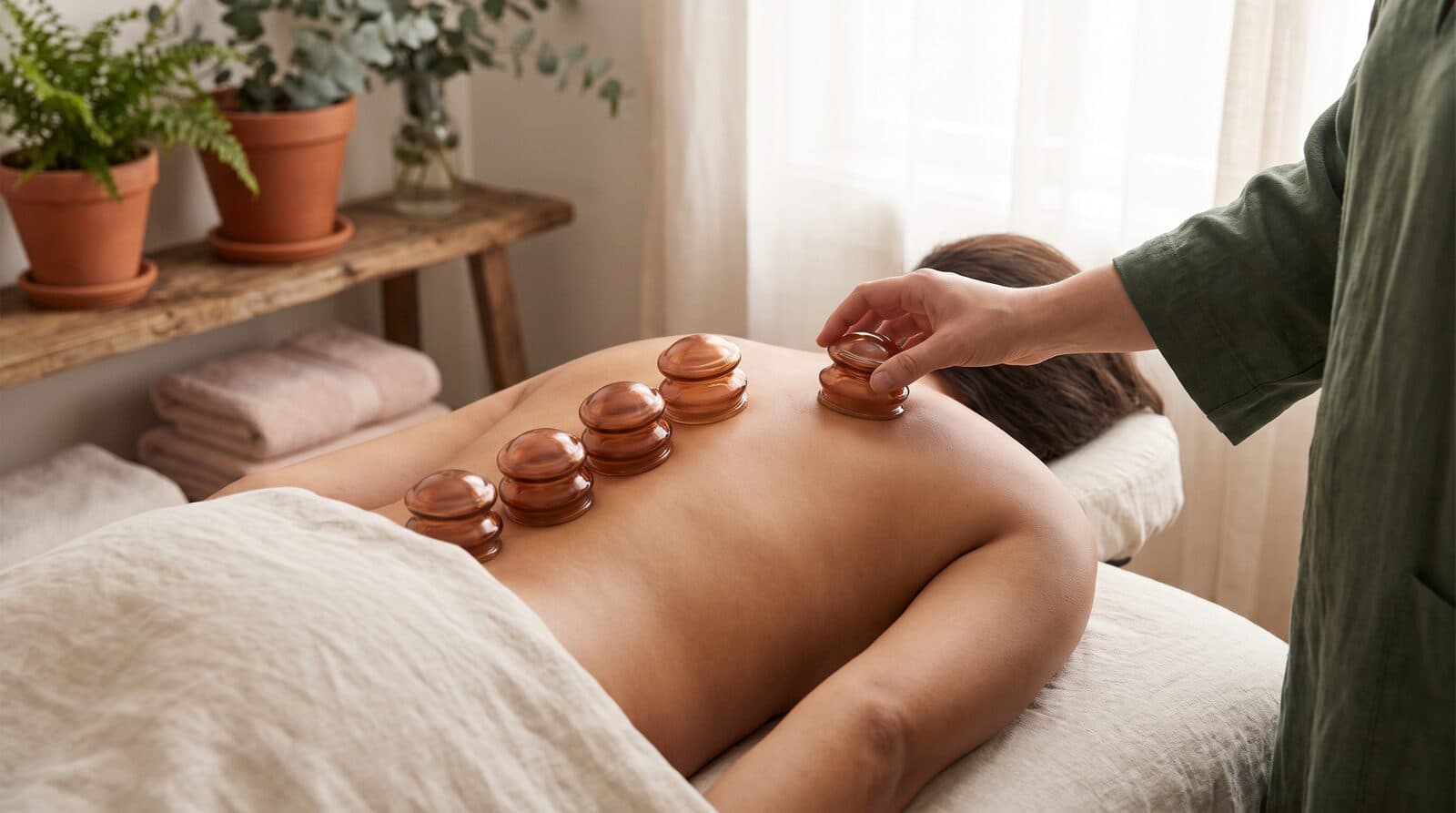
Most massage works by pressing in. Cupping does the opposite: it lifts. That single difference is why myofascial cupping and massage feels so unlike anything else on the menu, and why people who have plateaued with firm treatments often find it worth a try.
What myofascial cupping is
Fascia is the thin, continuous layer of connective tissue that wraps around and between your muscles. When an area has been tight for a long time, that layer can feel bound down and less willing to move. Myofascial cupping places soft suction cups on the skin to gently lift and decompress that tissue, either held in one spot or glided slowly along a muscle. The cups do the work that hands cannot do from above, and your therapist combines them with hands-on massage in the same session.
What myofascial cupping feels like
The sensation is a firm pull rather than a push. Most people describe it as odd for the first minute and then oddly satisfying, particularly across the upper back and the outside of the legs. It is not a painful treatment, and the suction is dialled to your comfort, not to a fixed setting. If you have had deep tissue and trigger point massage before, expect something noticeably lighter in pressure but with a deeper, stranger sort of reach.
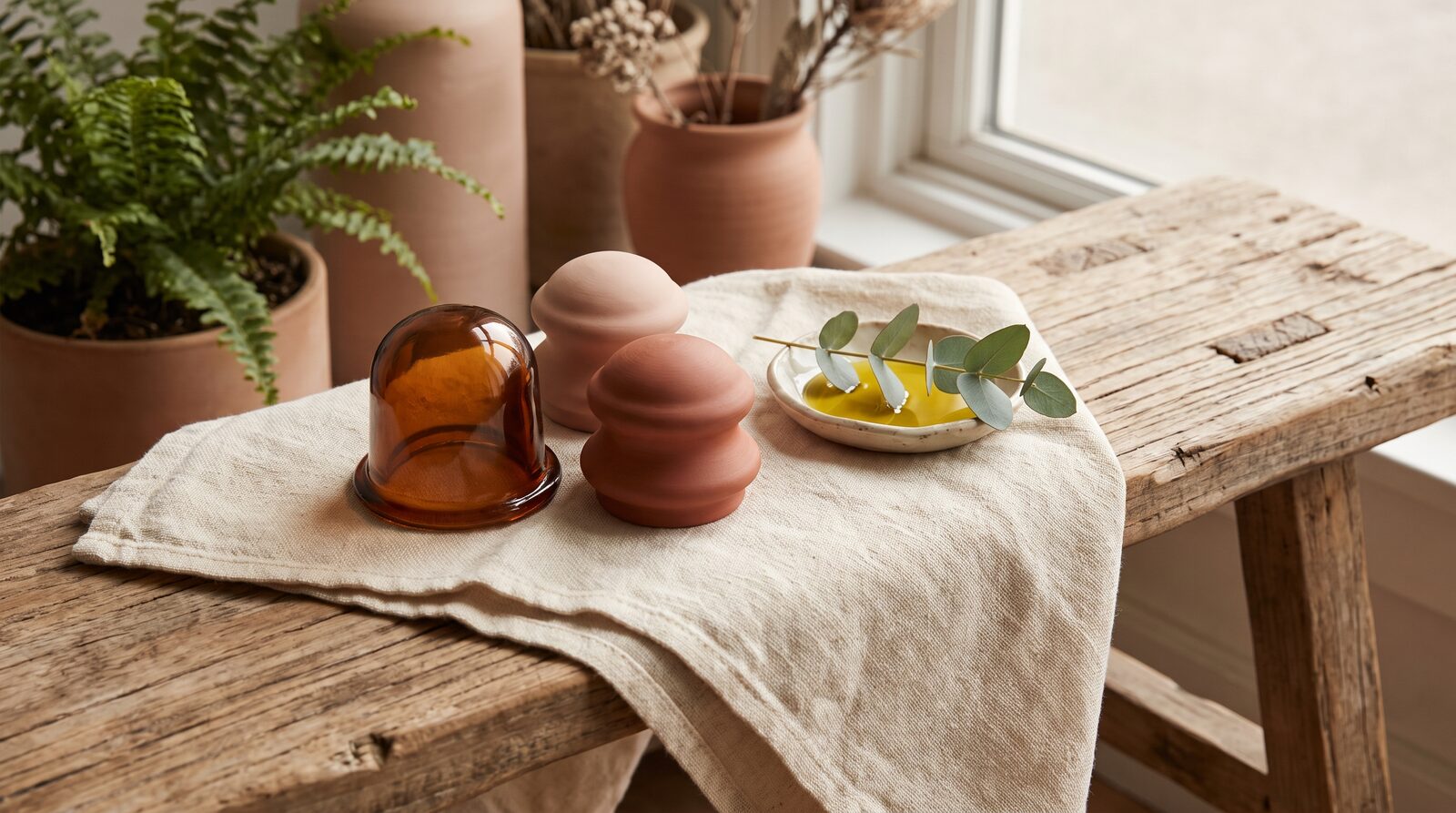
About the marks cupping can leave
Worth knowing before you book: cupping can leave round, coloured marks where the cups sat. They are not bruises in the usual sense, they are not painful, and they typically fade over several days. How much marking you get varies from person to person and from area to area, and your therapist will talk it through with you first. If you have an event, a wedding or a beach weekend coming up, say so and the treatment can be adjusted or saved for another time.
How myofascial cupping fits with other massage
Cupping is rarely the whole session. More often it is one technique inside a broader treatment, sitting alongside remedial work through the same area. It pairs particularly well with sports massage for people training regularly, and with focused work through the lower back and glutes of the kind described in our notes on sciatica massage. Sessions run 45 minutes at $100 or 60 minutes at $125. Afterwards, the usual advice applies: our guide to getting the most from your massage covers water, warmth and gentle movement.
Frequently asked questions
Does myofascial cupping hurt?
No. The suction is a strong pulling sensation rather than a painful one, and it is adjusted to your comfort throughout. Tell your therapist if a cup feels too strong and it will be eased off immediately.
How long do cupping marks last?
It varies between people, but the marks generally fade over several days. They are painless, and how much colour appears in the first place depends on the area and on you.
Can I have myofascial cupping in the same session as a massage?
Yes, and most people do. Cupping is usually one part of a treatment that also includes hands-on massage through the same area, rather than a standalone appointment.
If you are curious about the cups, mention it when you book or at the start of your session. You can check availability online any time, or see the full massage treatment menu first.
- myofascial cupping
- cupping massage
- myofascial release
- fascia
- cupping massage Perth
- myofascial cupping Innaloo
- deep tissue massage
- massage Innaloo
- massage Perth
Ready to book a session with us?
Book on Fresha“Such a great experience at Fern & Soul. The clinic itself is modern and beautifully presented, with a calm and relaxing atmosphere from the moment you walk in. Amy was incredibly welcoming and made me feel comfortable straight away. I had a remedial massage and was really impressed with her technique — she clearly knows what she’s doing and worked on exactly the areas that needed attention. I left feeling so much better and will definitely be back. Highly recommend Amy and Fern & Soul if you’re looking for a great remedial massage in a welcoming, calming space.”
Unit 2, 39 King George Street, Innaloo WA 6018. Free off-street parking.Get directions →